


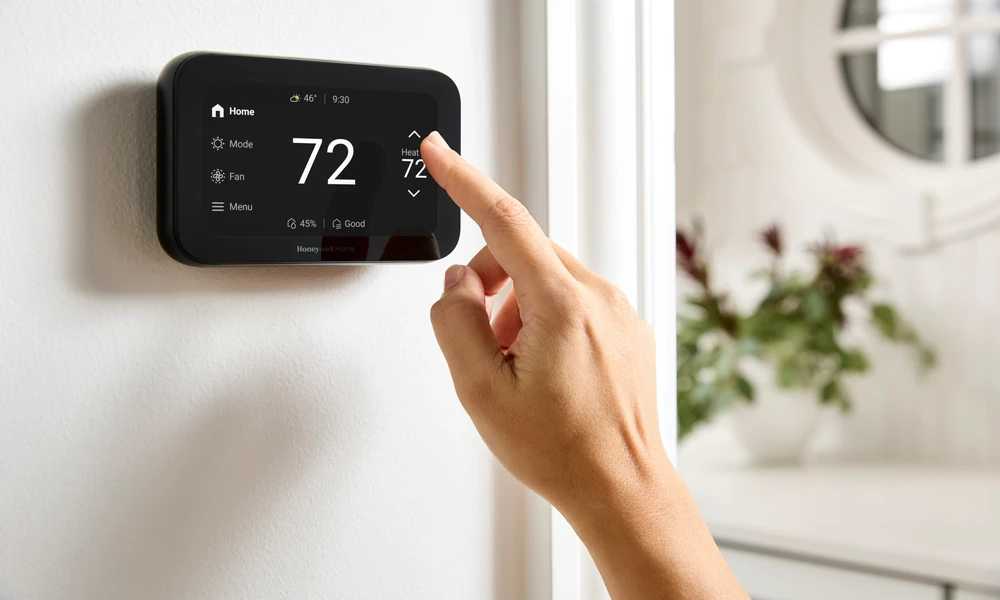
Sixty-four dollars. That’s roughly what a name-brand smart thermostat costs after a utility rebate in most Florida counties. The device itself is practically an impulse buy at that price. But if your existing HVAC system isn’t compatible, that sixty-four dollars turns into a service call, a return trip, and a month of frustration while you wait to feel the savings you were promised.
Smart thermostats are genuinely useful tools. They’re not magic, and they’re not a replacement for a well-maintained system. Florida homeowners specifically face a different set of considerations than someone in Ohio or Oregon: longer cooling seasons, high humidity, and systems that run almost year-round rather than a few months out of twelve. Getting this upgrade right means asking a few questions before you touch the box at the hardware store.
Why Your Cooling Load Is the Real Starting Point
Most smart thermostat marketing focuses on scheduling and remote control. That’s reasonable for a mild climate. In Florida, your AC isn’t running on a schedule so much as it’s running constantly. Sarasota and the surrounding Gulf Coast see temperatures climb above 90°F for months at a stretch, and your system responds by cycling more frequently and for longer periods.
This matters because a smart thermostat’s algorithms are trained on usage patterns that assume a predictable daily cycle: cool down in the morning, warm up while you’re at work, drop again before you return. When your system barely gets a break regardless of what the schedule says, those learning curves take longer and the energy savings may be smaller than the national average suggests.
According to the U.S. Department of Energy, space heating and cooling systems account for 44% of energy consumption in U.S. residences. That figure, documented in DOE’s 2022 Smart Diagnostic Tools campaign brief, means your thermostat decisions carry more financial weight than almost any other device in your home. Getting the setup wrong costs you on both ends: upfront installation and ongoing wasted energy.
Do Smart Thermostats Actually Save Money?
Short answer: yes, but with conditions. The savings are real and independently verified, they’re just not always as dramatic as the packaging implies.
According to ENERGY STAR, installing a smart thermostat can save homeowners about 8% on heating and cooling costs, and homes using ENERGY STAR-certified HVAC systems can save between 10% and 30% compared to standard systems. ENERGY STAR’s smart thermostat program certifies devices based on actual field data rather than manufacturer claims, which makes that 8% figure one of the more trustworthy numbers in a category full of marketing fluff.
The households that see the biggest gains are almost always ones where the old thermostat was either manual or a basic programmable model that nobody actually programmed. If you’ve been manually adjusting your thermostat every day before work, a smart device will absolutely improve on that. If your existing system is already running efficiently and you already have good habits, your savings will be at the lower end of the range.
“The biggest savings went to homes that previously left their systems running all day without adjustment. Homes with existing good thermostat habits saw much more modest gains.” – Finding cited across multiple independent utility field studies reviewed by energy researchers
Florida homeowners should also factor in cooling-specific behavior. Geofencing features, which detect when you’ve left the house and automatically raise the temperature, work extremely well in a hot climate. But some older Florida homes run dehumidification cycles even when no one’s home to prevent mold growth. A thermostat that aggressively sets back the temperature while you’re away might save cooling energy and create a humidity problem in the same afternoon.
The Florida Compatibility Matrix You Need to Run
Before buying anything, check your system against these four variables. I call this the Florida Compatibility Matrix because the stakes are different here than in colder states.
| Variable | What to Check | Why It Matters in Florida |
|---|---|---|
| C-Wire | Open your current thermostat and look for a wire labeled “C” | Most smart thermostats need continuous power. No C-wire often means adapters or rewiring |
| System Voltage | Confirm 24V low-voltage system (standard) vs. line voltage (older units) | High-voltage systems are incompatible with nearly every consumer smart thermostat |
| Heat Pump Configuration | Check whether you have a heat pump with emergency heat strips | Florida heat pumps need thermostats with O/B reversing valve support or you’ll damage the system |
| Humidity Control | Does your system have a separate dehumidification mode? | Only certain smart thermostats support dehumidification control; critical in coastal Florida |
Running through this matrix before you buy saves you a return trip and possibly a voided warranty. If you’re unsure about any of these checks, pull the current thermostat off the wall and photograph the wiring before you do anything else.
Compatibility Is the Step Most People Skip
Here’s a concrete scenario that plays out in Sarasota homes every summer. A homeowner buys a popular smart thermostat, installs it in twenty minutes, connects it to Wi-Fi, and spends the afternoon setting up schedules. Three days later they notice the house isn’t cooling properly. A technician comes out and discovers the thermostat isn’t configured correctly for their two-stage heat pump, causing the system to short-cycle and putting unnecessary wear on the compressor.
That’s not a hypothetical. It’s the most common post-installation complaint HVAC technicians report in hot climates, according to field technician communities across the industry. The fix is usually a setting, but the damage to the compressor from weeks of short-cycling isn’t reversible.
This is exactly why having a local HVAC professional involved before you commit to a specific model makes a difference. If you’re in the Sarasota area, AC Today HVAC services can assess your existing system’s compatibility and help you choose a thermostat that actually works with your specific equipment, including multi-stage systems and heat pumps with dehumidification modes.
Picking the Right Model Without Getting Lost in the Specs
There are three models that most Florida HVAC technicians recommend consistently, and the differences matter:
- Ecobee SmartThermostat Premium: Best for homes with multiple zones or remote sensors needed in large rooms. Handles humidity reporting well. Compatible with most heat pump configurations.
- Google Nest Learning Thermostat (4th Gen): Best for homes where the learning algorithm can actually observe varied usage patterns. Works cleanly with Google Home setups. Not ideal for complex multi-stage systems without professional configuration.
- Honeywell Home T9: Best for older systems or homeowners who prefer manual scheduling over AI-driven adjustments. Broad compatibility across system types, including some line-voltage setups with an adapter.
None of these is the universally correct answer. Your system’s age, your wiring, and how your household actually uses the space determine which model earns its price.
A 5-Step Pre-Installation Checklist
Run through this before purchasing anything:
- Photograph your current thermostat wiring with all wire labels visible.
- Identify your system type: central AC only, heat pump, or dual-fuel.
- Confirm whether your system has single-stage or multi-stage operation.
- Use the compatibility checker on the manufacturer’s website with your exact model numbers.
- If humidity control or dehumidification is part of your current system, verify the new thermostat supports it before unboxing.
Five steps sounds like a lot for a thermostat. But when nearly half your home’s energy bill runs through that device, it’s worth twenty minutes of homework.
The Upgrade That Actually Pays Off
A smart thermostat done right is one of the better investments you can make in a Florida home. You get lower energy bills, better visibility into how your system behaves, and the convenience of controlling your climate from anywhere. But “done right” means starting with your current system, not with the box on the store shelf.
Check your compatibility, confirm your wiring, understand your system type, and get a professional set of eyes on it if anything looks unusual. The savings are real. The frustration is avoidable. Which of those experiences you end up with comes down almost entirely to the fifteen minutes you spend before you buy.