


Most people pick a bank the way they pick a gas station: whichever one is closest when the tank runs empty. Then they stay for a decade. I did the same thing for eleven years, mostly because moving my checking account sounded like a Saturday I’d never get back. Then I actually did the math on what I was paying for the privilege, and the switch took four hours.
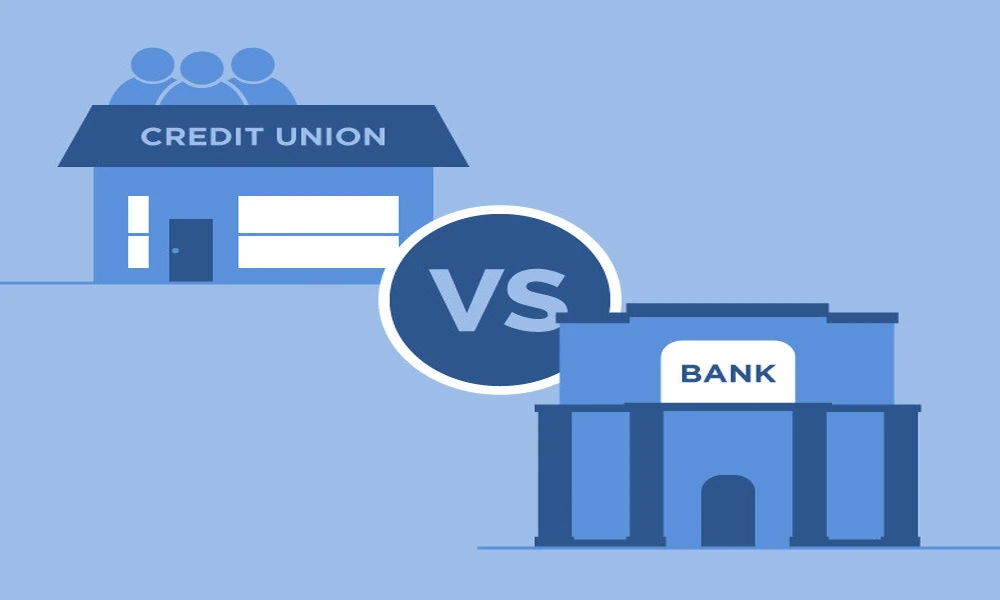
Here’s the short answer before you read another comparison chart: banks are built to make money for shareholders, and credit unions are built to return it to members. That single structural difference drives almost everything else you’ll notice, from the fee schedule to who answers the phone. If you live in northeast Alabama and you’re weighing a move, a credit union near Albertville, AL, is worth a hard look, especially if your current bank charges you to keep your own money parked.
What follows is the honest version. Credit unions aren’t automatically better, and I’ll tell you where they lose. But the gap between the two is narrower, and more specific, than either side’s marketing suggests.
Why the ownership model changes your fee schedule
A bank answers to people who own its stock. A credit union answers to the people who hold accounts there. That’s not a slogan, it’s a charter difference, and it shows up in the fine print around overdrafts, minimum balances, and monthly maintenance.
It shows up in the numbers too. The National Credit Union Administration, the federal agency that charters and insures credit unions, sets the operating framework these institutions live inside. Because members are the owners, surplus tends to flow back as lower loan rates, higher savings rates, or fewer fees rather than a quarterly dividend to outside shareholders.
Now the part that annoys me. Plenty of credit unions still charge overdraft fees. Plenty of banks offer free checking. The structural advantage is real, but it’s a tendency, not a guarantee. You have to read the actual schedule for the specific institution, and anyone who tells you otherwise is selling something.
What credit unions genuinely do better
Three things, based on my own switch and conversations with people who’ve made the same move.
- Human answers. A regional credit union typically routes you to a person who can make a decision, not a script that ends in “I’ll escalate this.”
- Loan pricing on the boring stuff. Used car loans and small personal loans are where member-owned institutions tend to compete hardest.
- Local lending judgment. A loan officer who knows the town can weigh context a national algorithm never sees.
I’d rank those in that order. The customer service difference is the one you’ll feel weekly. The rate difference is the one you’ll feel twice.
Where a big bank still wins
Be honest about the trade-off, because a bad switch is worse than no switch.
Large banks carry more branch density nationally, deeper app budgets, and more sophisticated fraud tooling on the debit side. If you travel constantly or you’re moving money across state lines every month, a national bank’s footprint is a real convenience you’d be giving up.
And here’s the stance I’ll commit to: for most people who live and work in one region, the local advantage outweighs the national footprint. For someone who’s in a different city every week, it flips. Pick based on your actual calendar, not on what sounds principled.
The membership question, answered
This trips up more people than any other part of the process. You can’t just walk in and open an account at most credit unions. There’s a field of membership, a defined group of people the charter allows it to serve.
That group is usually broader than people assume. It’s often built around a county, an employer group, a family relationship, or a community association. Many institutions also let you join a sponsoring organization to qualify. If you’re near Albertville in Marshall County, the eligibility question is the first thing to check, not the last.
The practical move: pull up the membership page, read the eligibility list out loud, and see which line describes you. If one does, you’re likely fifteen minutes of paperwork away from a new account.
A five-step switch you can finish in an afternoon
I’ve done this twice and the second time was painless because I followed a sequence instead of improvising.
- Confirm eligibility first. Don’t open anything until you know you qualify.
- Open the new account with a small deposit. Keep your old one active for at least a full billing cycle.
- Move your direct deposit, then wait. Two pay cycles is the safe window before you close anything.
- Redirect automatic payments one by one, in writing, from a list. Not from memory.
- Close the old account only after every recurring charge has cleared the new one twice.
Step four is where people get burned. I missed a streaming subscription for three months because I trusted my recall instead of a spreadsheet. Pull your last two statements and work from the transactions, not from what you think you signed up for.
How to size up a specific institution
Once you have two or three candidates, compare them on the same five lines. This is the part nobody puts on one page, so here it is.
| What to check | Why it matters | Green flag |
|---|---|---|
| Fee schedule | Small charges compound quietly | No monthly maintenance fee, clear overdraft terms |
| Share insurance | Protects your deposits up to the federal limit | NCUA insured, stated plainly on the site |
| Branch and ATM reach | Cash access you’ll actually use | Shared branching or a fee-free ATM network |
| Loan rates | The biggest dollar difference over time | Published rates you can compare side by side |
| Digital banking | How you’ll do 90 percent of your banking | Deposit-by-photo, alerts, working bill pay |
Deposit protection is the line item people skip, and it’s the one that matters most. For official guidance on how federal deposit insurance works and what it covers, the Consumer Financial Protection Bureau is the neutral starting point. Credit union accounts are federally insured through the NCUA, bank accounts through the FDIC, and both carry the same standard coverage limit.
How I’d decide if I were you
Run this test. Pull your last three bank statements and add up every fee, then every interest payment you received. If the fees beat the interest, you’re paying for the relationship and getting little back. That’s your signal.
Then check whether a local option is open to you. If it is, and you don’t need a branch in six states, I’d make the move. The structural reason is simple: at a member-owned institution, the money that would have gone to outside shareholders stays inside the pool of people who bank there.
The switch isn’t dramatic. Nobody’s life changes because they moved a checking account. But over ten years, the cumulative difference between nickel-and-dimed and not is real money, and it takes one Saturday to capture. If you’re reading this from Marshall County, start with the eligibility page, because that’s the only question standing between you and a better fee schedule. What’s your current bank charging you for the privilege of keeping your money there?